In September 2019 Bass Coast Shire Councillors joined a growing movement of councils leading the nation in declaring a climate emergency, recognising the serious risk that climate change poses to safety of the entire Bass Coast community.

Immediate and urgent action is required to reduce our emissions, build community resilience against the local impacts of climate change and ultimately reverse global warming. A target of zero net emissions by 2030 is now in place for Council operations as well as the wider community.

Bass Coast Shire is committed to doing everything it can to solve the challenge of climate change. As a region renowned for its natural beauty and productive land, it is critical that rapid action is taken to protect our natural assets, to maintain Bass Coast’s unique environment and secure a liveable and healthy future for our community.

Mid-term review of the Climate Change Action Plan

Community groups and local organisations were central to developing Council’s Climate Change Action Plan in 2020, and they remain key as we move into the next phase.

As part of the mid-term review, we invited community members to share their progress on climate action, priorities and preferences on emerging opportunities. We wanted to understand what’s working, what’s not, and where we can do better—especially when it comes to supporting community and business-led climate actions.

Feedback received helped us assess progress and guide Council’s efforts to cut emissions, build resilience, and ensure a fair transition for everyone.

Go to the Climate Change Action Plan Mid-Term Review page for further information about the review and to access outcomes from the community engagement.

What have we achieved so far?

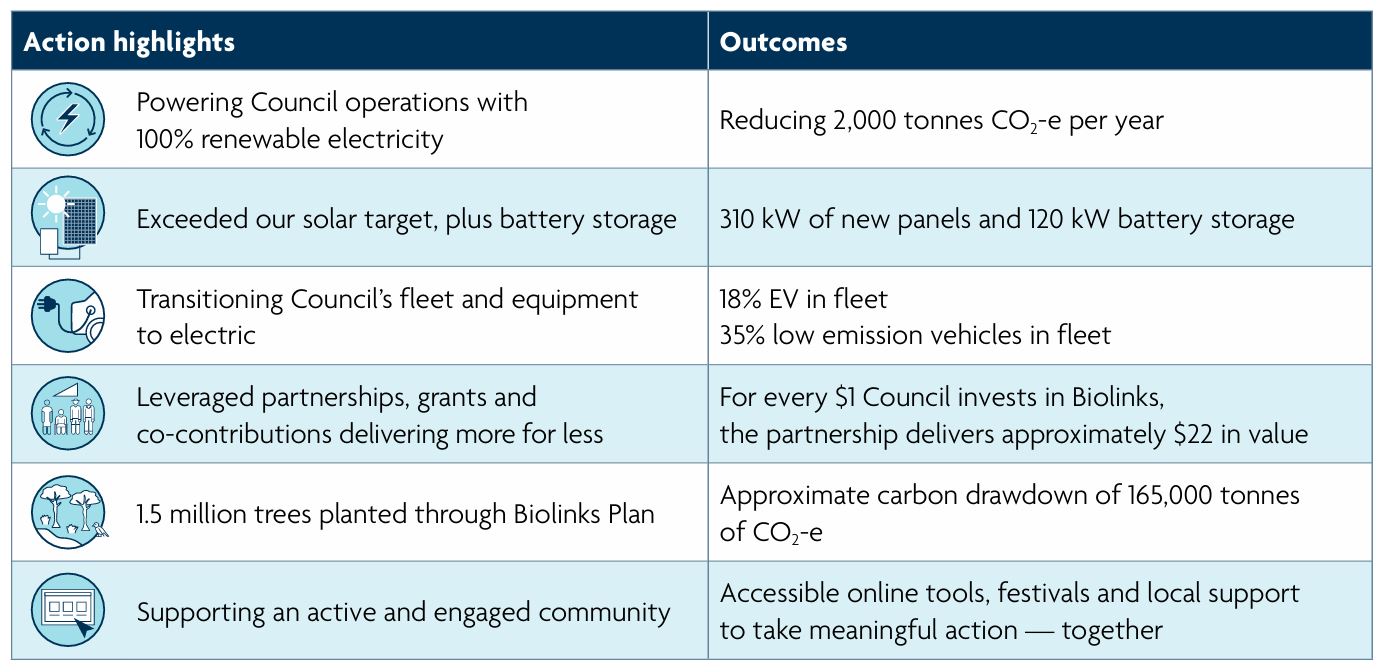
Summary of Council achievements from 2020-2025

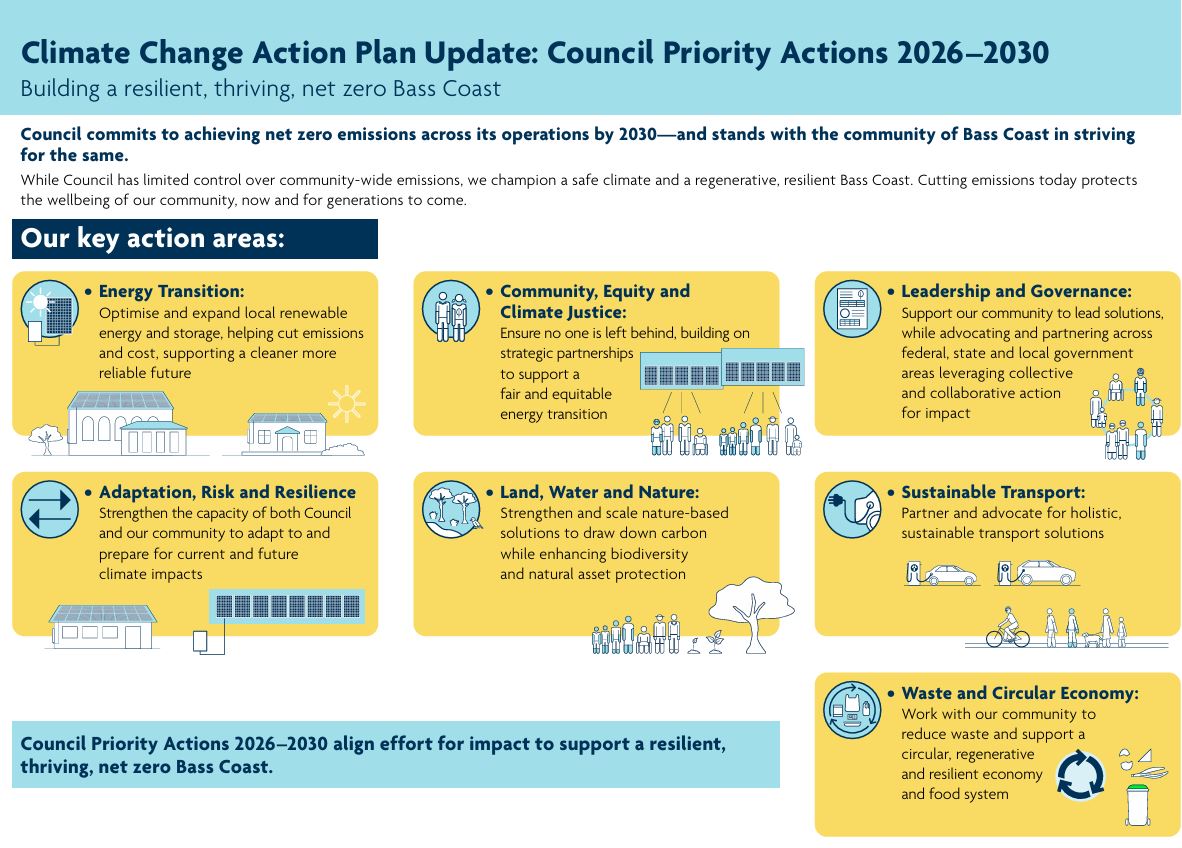
Climate Change Action Plan Update - Summary of Council Priority Actions

Plan on a Page - summary of updated Climate Change Action Plan

Learn more about actions Council has taken to reduce emissions.

  • Biolinks Tree Planting

    Council has budgeted around $950,000 over five years to deliver the Biolinks tree planting project, in partnership with the Bass Coast Landcare Network.

    This important initiative increases vegetation cover across Bass Coast, providing habitat connectivity for native species, and sequestering carbon.

    Since 2020, 1.5 million native trees and shrubs have been planted, drawing down an estimated 165,000 tonnes CO2-e.